




What is MBTI?
The Myers-Briggs Type Indicator (MBTI) is a personality assessment based on Jungian theory, describing how people perceive the world and make decisions.
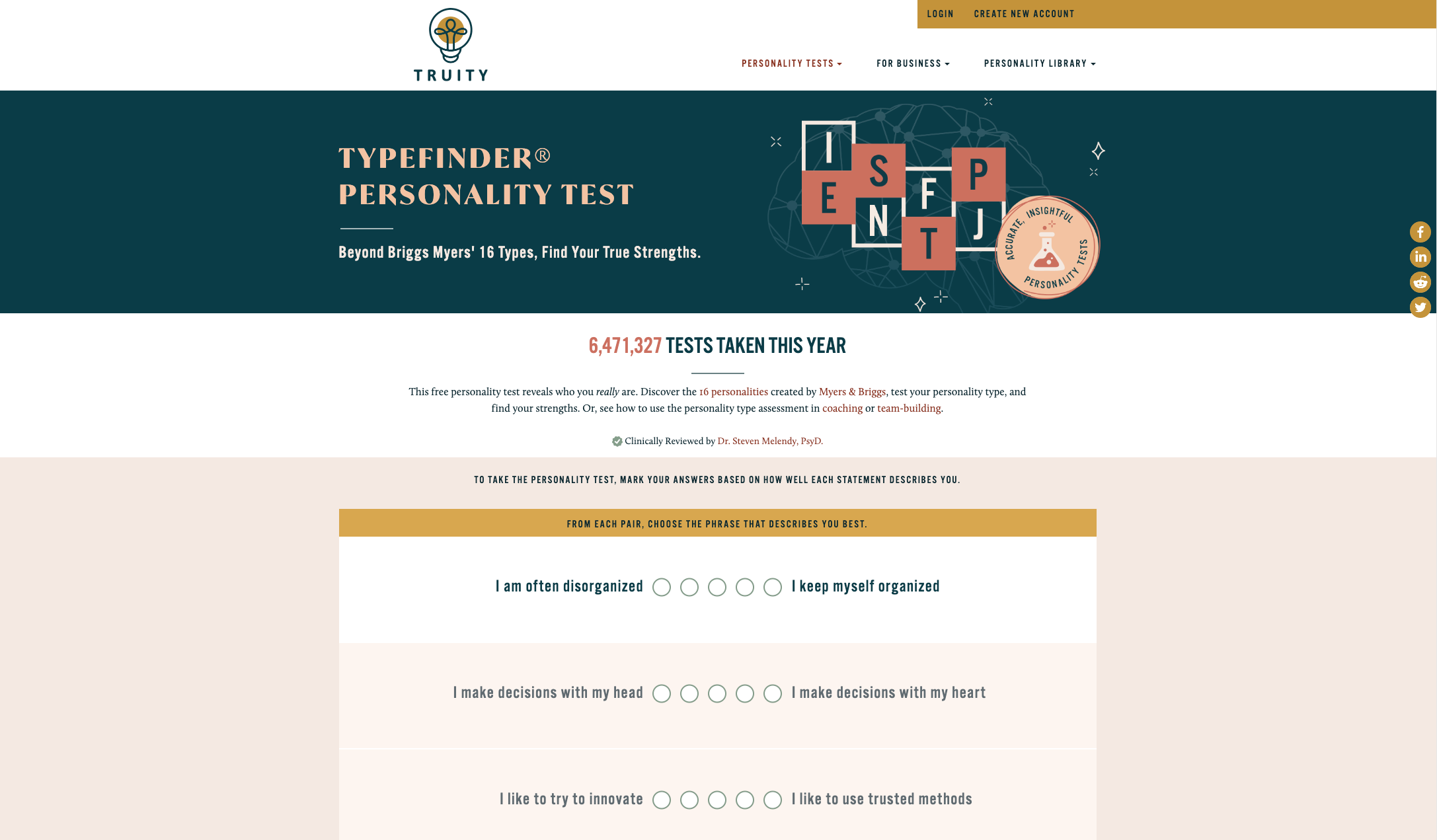
Focus: Directing energy toward the outer world or inner world.
Information: Focusing on facts vs patterns and possibilities.
Decisions: Using logic and objective criteria vs personal values.
Lifestyle: Preference for organized structure vs flexibility.
Brief History
Evolution from Jungian theory to modern pop culture
Birth of Jungian Theory
Carl Jung publishes 'Psychological Types', introducing introversion/extraversion and psychological functions.
Briggs' Discovery
Katharine Cook Briggs reads Jung's work and finds it aligns with her own observations.
Birth of MBTI Assessment
Isabel Briggs Myers develops the first version of the assessment (Form A) to help women find jobs during WWII.
Academic Recognition
ETS publishes the first MBTI Manual, marking its acceptance by the academic and psychological communities.
Commercialization & Expansion
CPP becomes the exclusive publisher, and MBTI expands globally, used in corporate training and personal development.
Internet Era Renaissance
With the rise of free sites like 16Personalities, MBTI breaks professional barriers and explodes in popularity online.
Official Rebranding
CPP rebrands as The Myers-Briggs Company, continuing to maintain the science and standards of the official assessment.
Pop Culture Phenomenon
MBTI embeds into pop culture, becoming a common language in East Asian variety shows, workplace socializing, and Gen Z introductions.
The 16 Personality Types
Complete list grouped by temperament